



What Are Digital Signage Solutions and How Do Australian Businesses Use Them?

Digital signage solutions are display systems that deliver dynamic, screen-based content across commercial environments. Australian businesses use them to communicate with customers, inform staff, promote products, and manage information in real time. Common across retail, hospitality, education, and corporate settings, digital signage replaces static printed materials with flexible, updatable content that can be managed remotely…
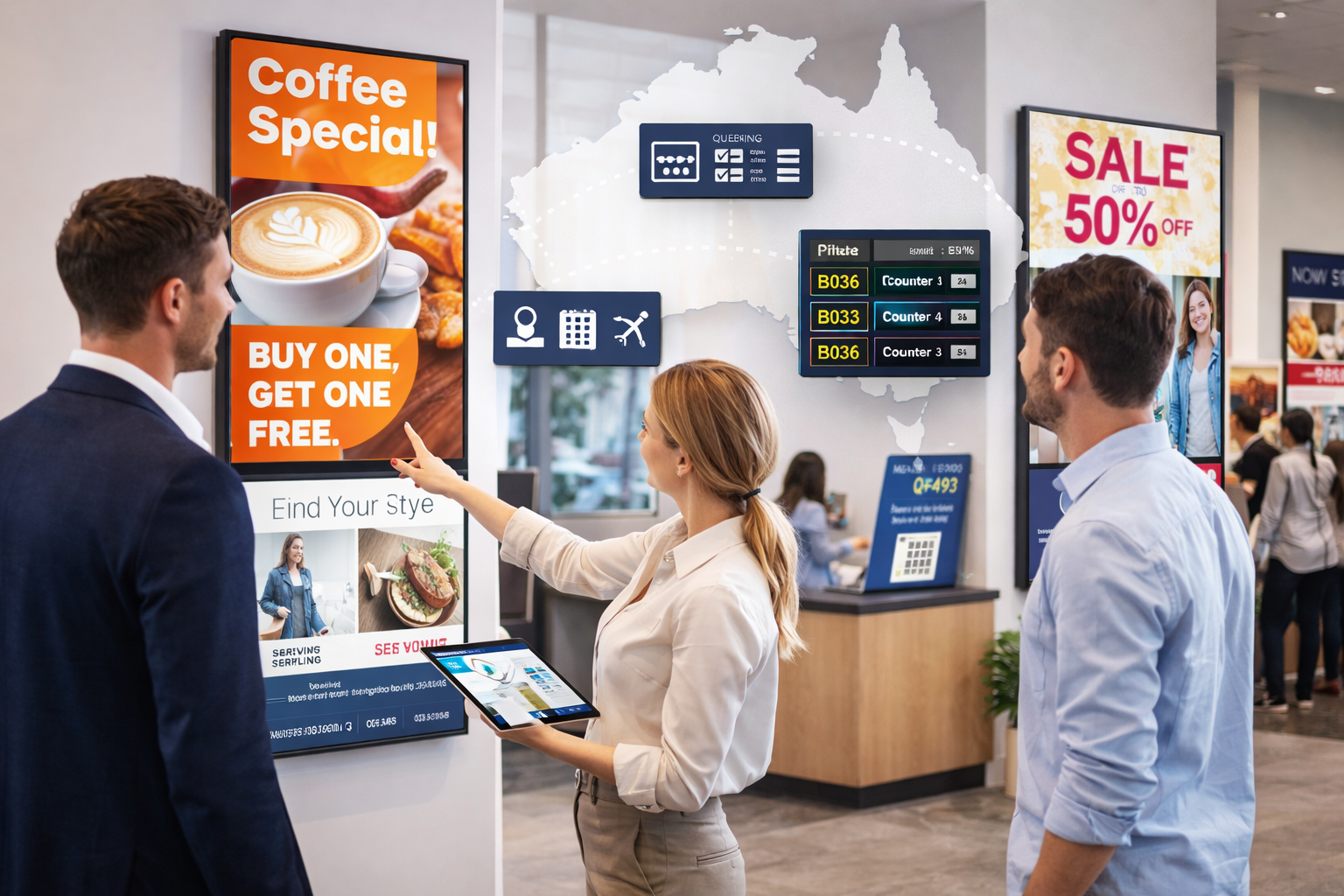
Digital signage solutions are display systems that deliver dynamic, screen-based content across commercial environments. Australian businesses use them to communicate with customers, inform staff, promote products, and manage information in real time. Common across retail, hospitality, education, and corporate settings, digital signage replaces static printed materials with flexible, updatable content that can be managed remotely and tailored to specific audiences.
Key Takeaways
- Digital signage solutions use screens and software to deliver dynamic, targeted content across commercial and institutional environments
- Australian businesses across retail, hospitality, education, and corporate sectors are adopting digital signage to improve communication and engagement
- Types include indoor and outdoor displays, video walls, interactive kiosks, and digital menu boards
- Professional installation and ongoing maintenance are essential to system reliability and long-term performance
- Choosing the right system requires matching the display technology, content management software, and installation approach to your specific environment
- Sydney Audio Visual Specialists supplies digital advertising display screens suited to a range of commercial environments
Digital Signage Solutions Australia for Modern Businesses
Digital signage refers to the use of networked display screens to show video, images, text, and interactive content in commercial, institutional, and public environments. Rather than relying on printed posters or static boards, businesses use digital displays to communicate messages that can be updated instantly, scheduled in advance, or triggered by real-time inputs.
Across Australia, businesses of all sizes are adopting digital signage to modernise how they present information. From a retail shopfront in Sydney to a boardroom in Melbourne, the applications are broad and the technology is increasingly accessible. As commercial AV systems become more advanced, digital signage has moved from a premium add-on to a practical operational tool.
For many Australian businesses, the appeal lies in flexibility. Content can be changed without printing costs, displayed across multiple locations simultaneously, and tailored to different audiences at different times of day. When combined with a professional installation and a reliable content management system, digital advertising display screens become a long-term asset rather than a one-time purchase.
Types of Digital Signage Used by Australian Companies
Understanding the different types of digital signage helps businesses choose the right solution for their environment and communication goals.
Indoor Digital Displays
Indoor displays are the most common form of digital signage in Australian businesses. These include wall-mounted screens, freestanding panels, and ceiling-hung displays used in reception areas, corridors, waiting rooms, and retail floors. They are suitable for communicating promotions, wayfinding, brand messaging, and operational updates.
Outdoor Digital Signage
Outdoor digital signage is designed for weather resistance and high-brightness performance to remain visible in direct sunlight. These systems are commonly used on building exteriors, in car parks, at transport hubs, and across hospitality precincts. Durability and brightness specifications are critical considerations for outdoor environments.
Video Walls
Video walls combine multiple screens into a single large display surface, creating a high-impact visual experience suited to lobbies, auditoriums, showrooms, and large public spaces. They are often used where impression and visual scale matter, such as in corporate headquarters, entertainment venues, or exhibition spaces.
Interactive Digital Signage
Interactive kiosks and touchscreen displays allow users to engage directly with content. Applications include self-service information points, wayfinding directories, product catalogues, and check-in systems. Interactive signage is increasingly common in retail, healthcare, and education settings.
Digital Menu Boards
Digital menu boards are widely used in hospitality environments including cafes, restaurants, pubs, and hotels. They allow menu items, pricing, and promotions to be updated quickly without reprinting, and can be programmed to change content based on time of day.
Benefits of Digital Signage for Retail and Corporate Environments
Digital signage delivers practical advantages across both customer-facing and internal business environments.
For retail businesses, digital signage supports promotional flexibility. Pricing, seasonal campaigns, and featured products can be updated quickly across multiple locations without the lead time and cost of print. Displays at point-of-sale or along customer pathways keep messaging relevant and timely. Digital advertising display screens are particularly well suited to high-traffic retail environments where visual impact drives customer engagement.
In corporate environments, digital signage improves internal communications. Screens in breakrooms, corridors, and meeting areas can display company news, performance dashboards, safety notices, and event schedules. This reduces reliance on email for announcements and ensures information reaches staff in shared spaces.
Across both environments, digital signage contributes to a more professional presentation. Reception areas, showrooms, and client-facing spaces benefit from displays that reinforce brand identity and create a polished first impression. For venues such as hotels, function centres, and auditoriums, signage also provides a practical wayfinding and event-management tool.
From an operational perspective, centrally managed digital signage reduces the ongoing cost and administration of printed materials. Updates are made through software, often from a single location, and can be deployed across multiple screens or sites simultaneously.
How Australian Businesses Implement Digital Signage Systems
Implementing a digital signage system involves several stages, and the quality of each stage directly affects how well the system performs over time.
Planning and Scoping
The first step is identifying what you need the system to do, where screens will be positioned, how content will be created and managed, and who will be responsible for day-to-day operation. At this stage, it is important to consider the physical characteristics of each space, including room size, ambient light levels, viewing distances, and available wall or ceiling mounting points.
Selecting the Right Equipment and Software
Equipment selection should be based on the specific requirements of each display location. Indoor and outdoor screens have different brightness and durability requirements. Businesses looking for commercially rated display hardware can explore the range of digital advertising display screens available through Sydney Audio Visual Specialists. Content management software should be evaluated for ease of use, scheduling capability, and compatibility with your existing systems. (Confirm with Sydney Audio Visual Specialists for guidance on suitable hardware and software options for your environment.)
Professional Installation
Professional installation ensures that screens are mounted correctly, cabling is managed safely, and the system is configured to perform reliably from day one. Poor installation can affect display quality, introduce safety risks, and create long-term maintenance problems. Working with an experienced AV team reduces these risks and ensures the system is set up to your operational requirements.
Staff Training and Handover
Once installed, staff responsible for managing content should be trained on the content management platform. A clear handover process helps ensure the system is used effectively and that day-to-day management does not become a burden on your team.
Key Features of Commercial Digital Signage Platforms
The software platform used to manage digital signage content is as important as the hardware. For commercial deployments, key features to consider include:
Content Scheduling and Automation
Commercial platforms allow content to be scheduled in advance, with different content playing at different times of day or across different days of the week. Automation reduces the manual workload of updating displays and ensures content stays relevant without constant attention.
Centralised Multi-Screen Management
For businesses operating across multiple locations or managing many screens from a single point, centralised management tools are essential. These allow content to be pushed to individual screens or groups of screens simultaneously, with control over what plays where and when.
Analytics and Reporting
Some commercial platforms include analytics tools that provide data on content performance, screen uptime, and scheduling compliance. This is particularly useful for businesses that want to measure the effectiveness of their signage content over time.
Integration with Existing Systems
In more complex deployments, digital signage platforms may need to integrate with point-of-sale systems, meeting room booking tools, or data feeds. Compatibility with your existing infrastructure is an important consideration during platform selection.
Industries in Australia Using Digital Signage Technology
Digital signage is used across a wide range of industries and environments in Australia.
Retail and Commercial Shopfronts use digital signage for promotions, window displays, and in-store communication. The ability to update content quickly makes it well-suited to fast-moving retail environments. Commercially rated digital advertising display screens are a practical choice for shopfronts and retail floors where visibility and durability are both priorities.
Corporate Offices and Boardrooms use displays for internal communications, video conferencing support, and meeting room management. Digital signage in corporate settings supports both daily operations and client-facing presentation.
Hotels and Hospitality Venues use digital signage for event directories, wayfinding, promotional displays, and digital menu boards. These systems help manage guest communication across large properties without requiring printed materials to be reprinted constantly.
Nightclubs and Pubs use digital displays for promotions, entertainment scheduling, and ambience. LED displays and video walls are common in entertainment venues where visual impact is part of the experience.
Schools and Educational Facilities use digital signage for student communications, timetable displays, emergency notifications, and campus-wide announcements. Interactive displays in classrooms support learning and engagement.
Auditoriums and Showrooms use large-format displays and video walls to support presentations, product showcases, and audience engagement. These environments often require professional AV integration to ensure the signage system works alongside other audio visual equipment.
Common Mistakes When Implementing Digital Signage
Even well-intentioned digital signage projects can underperform if common pitfalls are not addressed early.
Choosing screens without considering the room environment is one of the most frequent issues. A display that performs well in a dim corridor may be unreadable in a sunlit reception area. Brightness, glare, and viewing angle all need to be matched to the installation location.
Focusing only on upfront hardware cost can lead to poor decisions. A cheaper screen may not be rated for commercial use, leading to a shorter lifespan and higher maintenance costs over time. Total cost of ownership, including installation, software, and ongoing servicing, is a more reliable basis for budgeting.
Underestimating the importance of professional installation is another common mistake. Incorrect mounting, inadequate cable management, or improper configuration can all affect display quality and system reliability.
Failing to plan for content management is also problematic. A digital signage system is only as effective as the content it displays. Without a clear plan for who will create, update, and manage content, screens often end up showing outdated information, which reflects poorly on the business.
Finally, overlooking ongoing servicing and maintenance needs can lead to system downtime. Like any commercial technology, digital signage systems benefit from regular maintenance and prompt attention when issues arise.
Get the Right Digital Signage Solution for Your Space
Ready to explore digital signage for your business, venue, or facility? View the range of digital advertising display screens or contact Sydney Audio Visual Specialists to request a quote tailored to your environment. Contact Sydney Audio Visual Specialists
Not sure which type of signage suits your space? Speak with the team at Sydney Audio Visual Specialists for honest, practical advice before you commit. Get in touch today
Frequently Asked Questions
What are digital signage solutions? Digital signage solutions are display systems that use networked screens and content management software to deliver dynamic visual content in commercial and institutional environments. They replace static printed signs with flexible, updatable displays that can be managed remotely and tailored to specific audiences, locations, and times of day.
How do Australian businesses use digital signage? Australian businesses use digital signage to communicate with customers, inform staff, promote products and services, provide wayfinding, and support brand presentation. Applications span retail, hospitality, corporate offices, schools, auditoriums, and showrooms, with each environment using signage to meet specific operational and communication goals.
What types of digital signage are most commonly used in Australia? The most common types include indoor wall-mounted or freestanding displays, outdoor high-brightness screens, video walls, interactive kiosks, and digital menu boards. The right type depends on the environment, viewing distance, ambient light conditions, and what the display needs to communicate.
How much do digital signage solutions cost in Australia? Costs vary depending on the type and number of screens, installation complexity, content management software, and ongoing servicing requirements. (Confirm pricing with Sydney Audio Visual Specialists based on your specific environment and requirements.)
What industries in Australia use digital signage the most? Retail, hospitality, corporate offices, education, and entertainment venues are among the most active users of digital signage in Australia. Each industry applies the technology differently, from promotional displays in retail to student communication systems in schools and event directories in hotels.
What features should I look for in a commercial digital signage platform? Key features include content scheduling and automation, centralised multi-screen management, analytics and reporting, and integration capability with existing business systems. The right platform depends on how many screens you are managing, how frequently content changes, and what level of control your team requires.
Do I need professional installation for digital signage? Professional installation is strongly recommended for commercial deployments. It ensures screens are mounted correctly and safely, cabling is managed properly, and the system is configured to perform reliably. Poor installation can affect display quality and create long-term maintenance issues.
Can digital signage be managed remotely? Most commercial digital signage platforms support remote content management, allowing updates to be pushed to screens from a central location without being on-site. This is particularly useful for businesses managing signage across multiple locations. (Confirm remote management capabilities with Sydney Audio Visual Specialists.)
What is the difference between indoor and outdoor digital signage? Indoor displays are designed for controlled lighting environments and typically operate at standard brightness levels. Outdoor displays require higher brightness to remain visible in direct sunlight and must be built to withstand weather conditions including heat, humidity, and moisture. Choosing the wrong category for your environment can result in poor visibility or premature hardware failure.
How do I choose the right digital signage for my venue? Start by identifying where screens will be placed, what content you need to display, who will manage that content, and what your long-term maintenance capacity looks like. An experienced AV specialist can assess your space and recommend a system that is fit for purpose. Sydney Audio Visual Specialists stocks digital advertising display screens and can advise on the right option for your environment. (Confirm recommendations with Sydney Audio Visual Specialists.)
Can digital signage be integrated with other AV systems? In many commercial environments, digital signage operates alongside other audio visual equipment including sound systems, video conferencing setups, and presentation displays. Integration is possible in many cases, but compatibility depends on the specific systems involved. (Confirm integration options with Sydney Audio Visual Specialists.)
About Sydney Audio Visual Specialists
Sydney Audio Visual Specialists provides tailored audio visual solutions including AV equipment hire, product sales, installation, repair, and maintenance. The team supports a wide range of client types and environments, including schools, boardrooms, hotels, meeting rooms, auditoriums, showrooms, commercial shopfronts, and corporate facilities, with a focus on reliable service and honest advice.